
Each destination of the Pelayo Vida Challenge is chosen by evaluating the country's safety, its natural wealth, and the feasibility of designing a 10 to 12-day sports challenge.
Choosing a new point on the map for the Pelayo Life Challenge goes far beyond drawing a beautiful route: we seek a challenging place where physical effort becomes a real message of overcoming. In each edition, five women who have overcome cancer face nature to demonstrate (to themselves and to those undergoing treatment now) that after the illness, there is much life ahead.
With more than a decade of expeditions behind us, behind every destination lies almost a year of prior work between doctors, local guides, embassies, and the filming crew. Before announcing the challenge for each season, we evaluate each territory on the ground to ensure that the adventure is demanding and, at the same time, completely safe.
The four criteria that define the destinations of the Pelayo Vida Challenge
For a country to become the host of the Pelayo Vida Challenge, it must pass through four very specific filters in which the safety of the participants takes precedence over everything else.
1. Nature as a metaphor for reclaiming life
In oncology, scientific evidence increasingly supports the benefits of adapted physical exercise and a healthy diet to reduce fatigue, regain functional capacity, and strengthen physical and mental health after treatments. At Reto Pelayo Vida, we bring that scientific evidence to the field: we seek natural environments that require real effort and teamwork, just as is the case when undergoing an oncological process.
That is why we avoid repeating the same formula. In each edition we change the means and discipline, alternating between high mountain trails, ocean navigation, polar ice, desert, jungle or rural routes.
2. A safe and stable territory for traveling with full guarantees
Before committing to a destination, our first non-negotiable filter is the country’s safety. We analyze political stability and official travel recommendations to confirm that we can move and exercise outdoors without unnecessary risks. We work hand in hand with embassies, tourism bureaus, and local authorities to ensure reliable communications and institutional support in the event of any unforeseen circumstances.
This evaluation is carried out in close coordination with embassies, tourism offices and local authorities, ensuring that both the five expedition members and the entire team on assignment have official support, reliable communications and clear protocols for handling any unforeseen situation.
3. Logistics feasibility and health support on the ground
Carrying out a sporting expedition in remote areas involves solving complex logistics well before taking the first step. The entire team of the main expedition usually consists of between 17 and 18 people, including the five participants, specialized guides, medical staff, filming equipment, and the press who report daily on the progress of the adventure.
To ensure that every stage of trekking, cycling, navigation or kayaking is feasible and safe:
- Scouting trip or preliminary reconnaissance: Months before the expedition, two representatives of the organization travel to the country during 12 to 17 days to explore routes on the ground, measure real times, check access points and assess weather conditions.
- Sports challenges from 10 to 12 days: The itinerary is designed to offer an authentic physical challenge of between 10 and 12 days of continuous sporting activity, integrated into an expedition and training program whose total duration ranges between 15 and 17 days.
- Permits and institutional support: We work with embassies, local agencies and public bodies to manage filming permits, adapted vehicles and technical support in protected or difficult-to-access environments.
- Medical assistance protocols: In addition to having healthcare personnel integrated into the group throughout the entire journey, the route design always includes evacuation and assistance points adapted to the terrain characteristics.
4. Natural wealth, cultural heritage and narrative power
Each expedition becomes a documentary feature film broadcast on international platforms such as Amazon Prime Video, National Geographic, or Discovery, reaching millions of viewers worldwide. The landscape is not just a beautiful backdrop; it helps to tell what the protagonists are experiencing on the inside.
We look for places with their own culture and a nature that impresses on its own. When the viewer sees the crossing of Drake Passage in Antarctica or the coexistence with local communities in West Africa, they immediately understand the magnitude of the effort and the message that the five expeditions are sending out.
Over a decade of traveling across peaks, seas and continents
Since our first expedition in 2015, more than 3,354 women have applied to be part of these adventures around the world. These are the destinations that have marked our history:
- 2015 – Kilimanjaro (Tanzania): Ascension to the Uhuru peak (5,895 meters), the roof of Africa.
- 2016 – Trasatlántica: Sail across the Atlantic Ocean from Spain to the Caribbean Sea (Martinique Island)
- 2017 – Polar (Greenland): foot expedition across the ice of the Greenlandic Arctic.
- 2018 – Annapurna Bike (Nepal): Mountain biking route around the Annapurna massif in the Himalayas.
- 2019 – Andes (Bolivia): Expedition in high mountain with ascent to Nevado Sajama and Acotango in the Andes mountain range.
- 2020 – Sailing around Spain (Spain): navigation along the Iberian Peninsula coastline between the Mediterranean Sea and the Atlantic Ocean.
- 2021 – 66 Norte (Arctic): Sail across the Arctic Circle to reach the 66th parallel north.
- 2023 – Patagonia (Argentina): expedition to the South Patagonian Ice Field with ascent to Gorra Blanca mountain.
- 2024 – Antarctica: Sailing across the Strait of Huescas (Drake Passage) towards the Antarctic Peninsula.
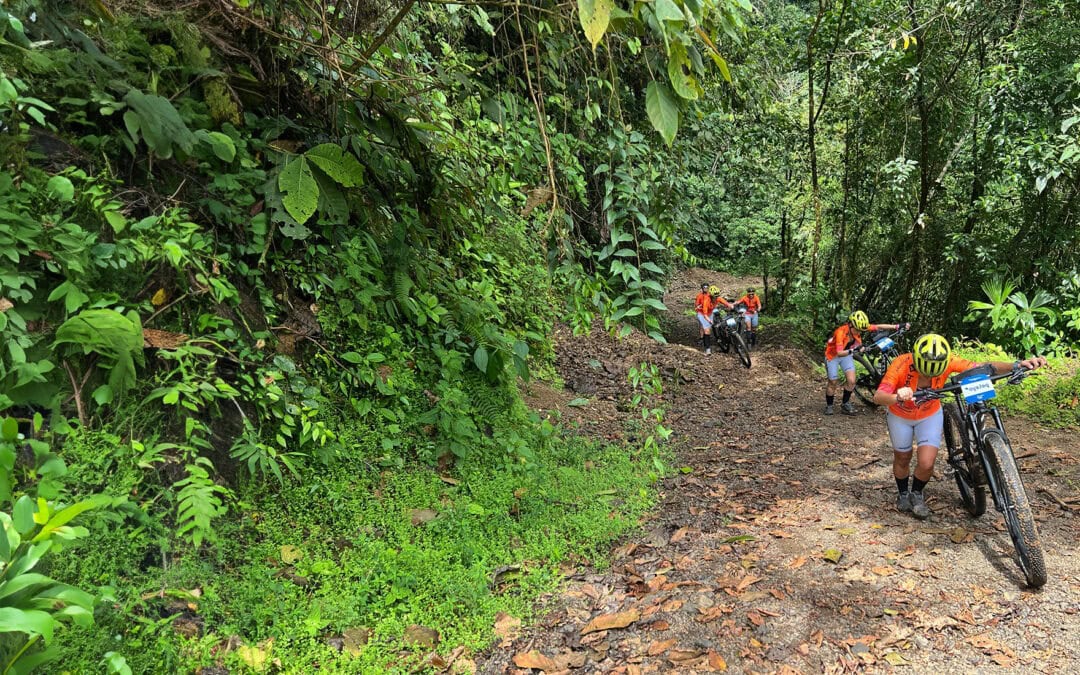
- 2025 – Costa Rica: a journey coast to coast from the Pacific Ocean to the Caribbean Sea.
- 2026 – Senegal: Twelfth edition among mangroves, deltas, villages and rural roads of West Africa.
An annual preparation cycle before departure
The revelation of the destination marks the start of a twelve-month calendar perfectly structured. After opening the application process and selecting the five protagonists, the chosen ones undergo six months of specific training adapted to the exact requirements of the territory (whether it be acclimatization to altitude, cycling endurance, or navigation) before embarking on the journey.
Frequently asked questions about the destinations of the Pelayo Vida Challenge
Although the routes are demanding, each stage is planned taking into account the participants' oncological history. Before traveling, the five selected undergo medical examinations and follow a six-month training plan to prepare themselves for the specific terrain of that edition, in addition to receiving continuous medical follow-up throughout the entire route.
The entire trip takes between 15 and 17 days, of which between 10 and 12 are of continuous sporting activity. During the reconnaissance, we rule out, as far as possible, any stretch that does not have clear evacuation routes, emergency coverage, or safe alternatives in case of storm or sudden change in temperature.
We never improvise. The entire itinerary includes pre-marked evacuation points, satellite communication in areas without mobile coverage, and a specialized expedition insurance that covers rescues and even helicopter evacuation if necessary.